STEP-BY-STEP TRACK RESEATING FOR PATIO DOORS
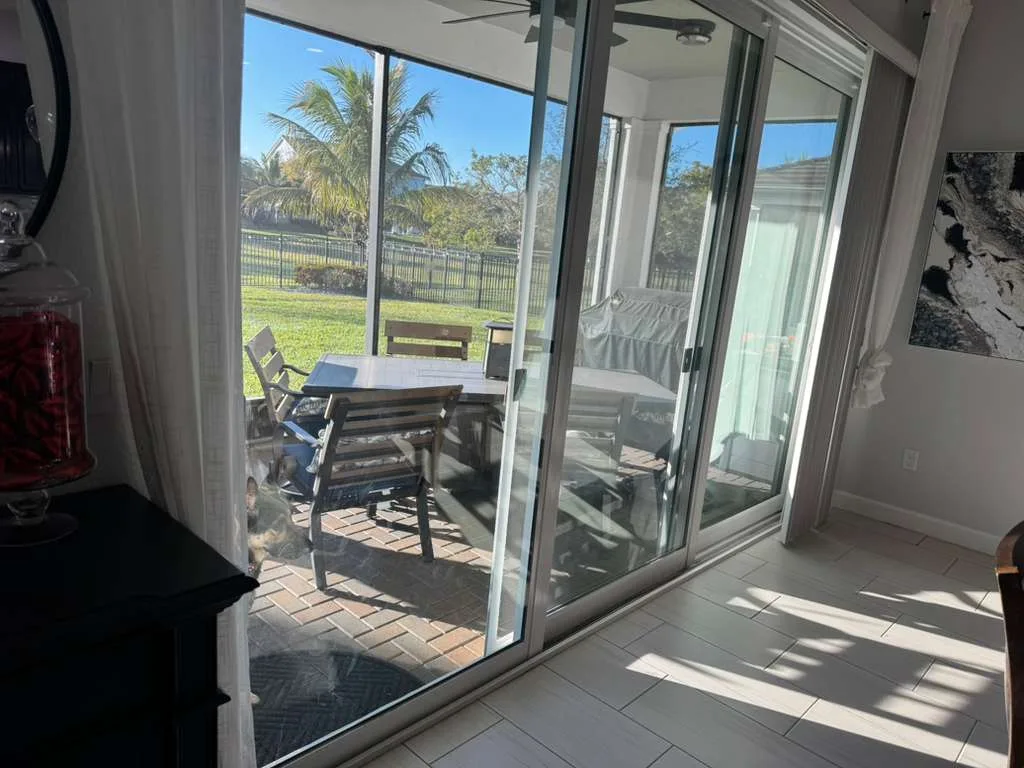
Before reseating any panel, Treasure Coast Sliding Door Repair clears the aluminium track channel of debris and inspects for bends, corrosion ridges, or obstruction. Attempting to reseat a roller into a damaged or dirty channel causes immediate re-derailment and worsens existing track wear. This prep step is the most commonly skipped part of DIY attempts.
TCSDR technicians tilt the door panel inward at the top while lifting slightly at the base to position the roller cartridges above the track channel opening. The panel is then lowered until the rollers seat into the channel groove under controlled, even pressure. Panel weight is distributed using lifting tools that prevent lateral glass stress during this phase.
With the rollers engaged, Treasure Coast Sliding Door Repair slides the panel through its full travel range and checks for smooth movement and level alignment. If the door drags on one side or fails to seal flush at the stop, the roller height adjusters are turned to bring the panel into correct horizontal plane. TCSDR confirms lock engagement before completing the call.
Treasure Coast Sliding Door Repair is Fort Pierce's licensed sliding door technician team, holding DBPR certification and a 5.0-star rating backed by 75 verified reviews. TCSDR technicians have reseated patio doors in South Beach, Indian River Estates, Lakewood Park, and White City with same-day availability throughout the week.
TCSDR's track reseating service includes channel inspection, debris clearance, roller assessment, panel realignment, height adjustment, and locking mechanism verification. If the reseating reveals worn or damaged rollers, TCSDR replaces them on the same visit using parts stocked on the service vehicle for Fort Pierce's most common door configurations.
Treasure Coast Sliding Door Repair serves Fort Pierce ZIP codes 34947, 34949, 34950, 34951, and 34982. Properties near Fort Pierce Inlet State Park, the Manatee Observation Center, and the Sunrise Theatre area receive same-day service with no travel surcharge for Fort Pierce addresses.
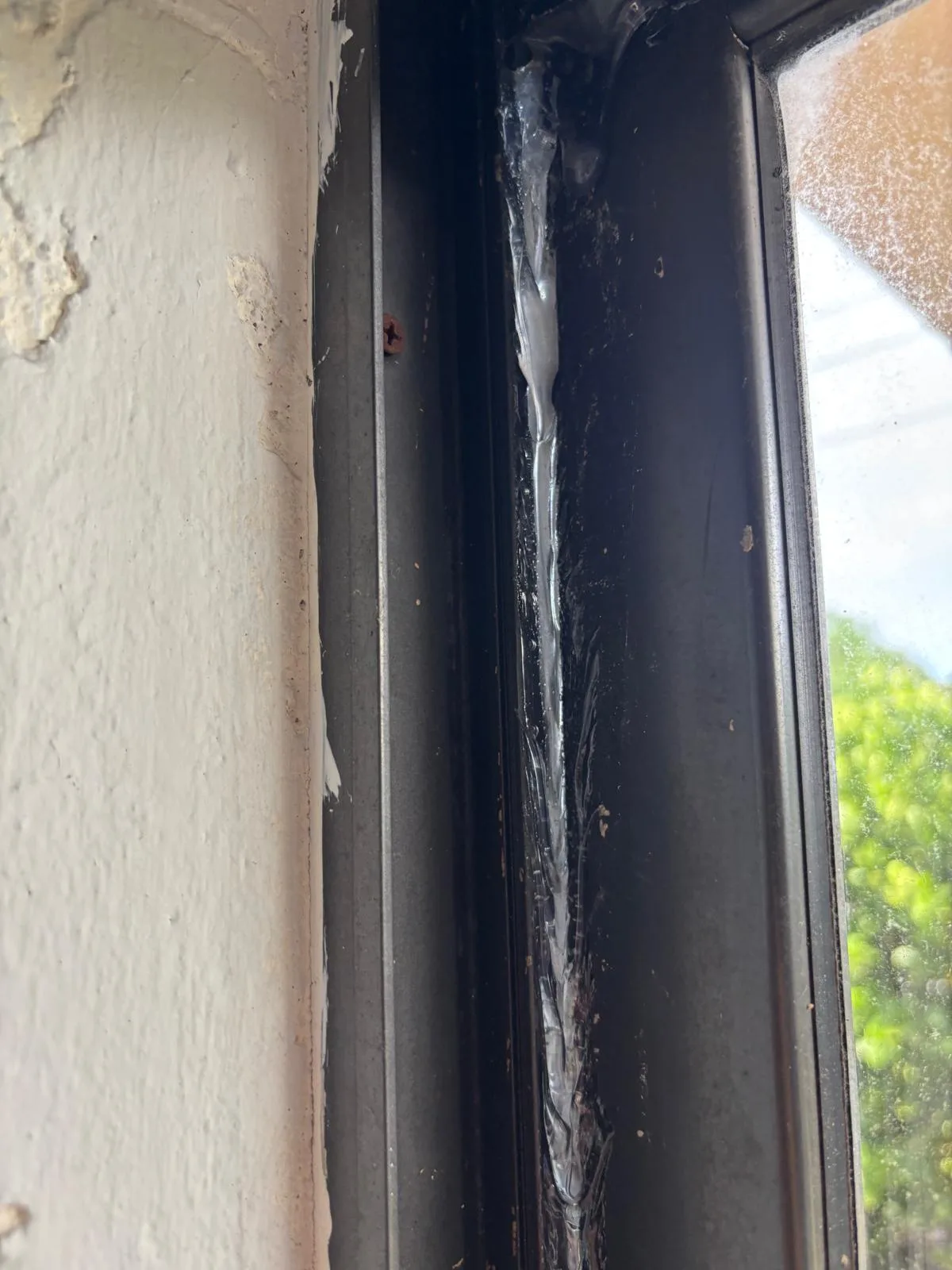
A sliding door rides on roller cartridges that sit inside a U-shaped aluminium channel - the track rail. The roller's wheel engages the channel floor, and the cartridge housing rides between the channel walls, keeping the door panel laterally stable as it moves. When the roller exits the channel, whether by climbing a debris ridge or tipping past a bent channel wall, the door panel is no longer supported by the track system and relies on frame contact alone.
Getting the door back on its track means repositioning the roller cartridge so the wheel re-engages the channel floor at the correct depth. This requires lifting the panel slightly, tilting the top inward to clear the upper track, and lowering with precision so the roller seats cleanly rather than landing on the channel lip.
Treasure Coast Sliding Door Repair technicians use low-profile lifting platforms and roller-guide jigs that make this a controlled process. Without these tools, the panel typically needs to be lifted higher than the channel clearance allows, placing glass-fracture stress on the corner joints of the aluminium frame.
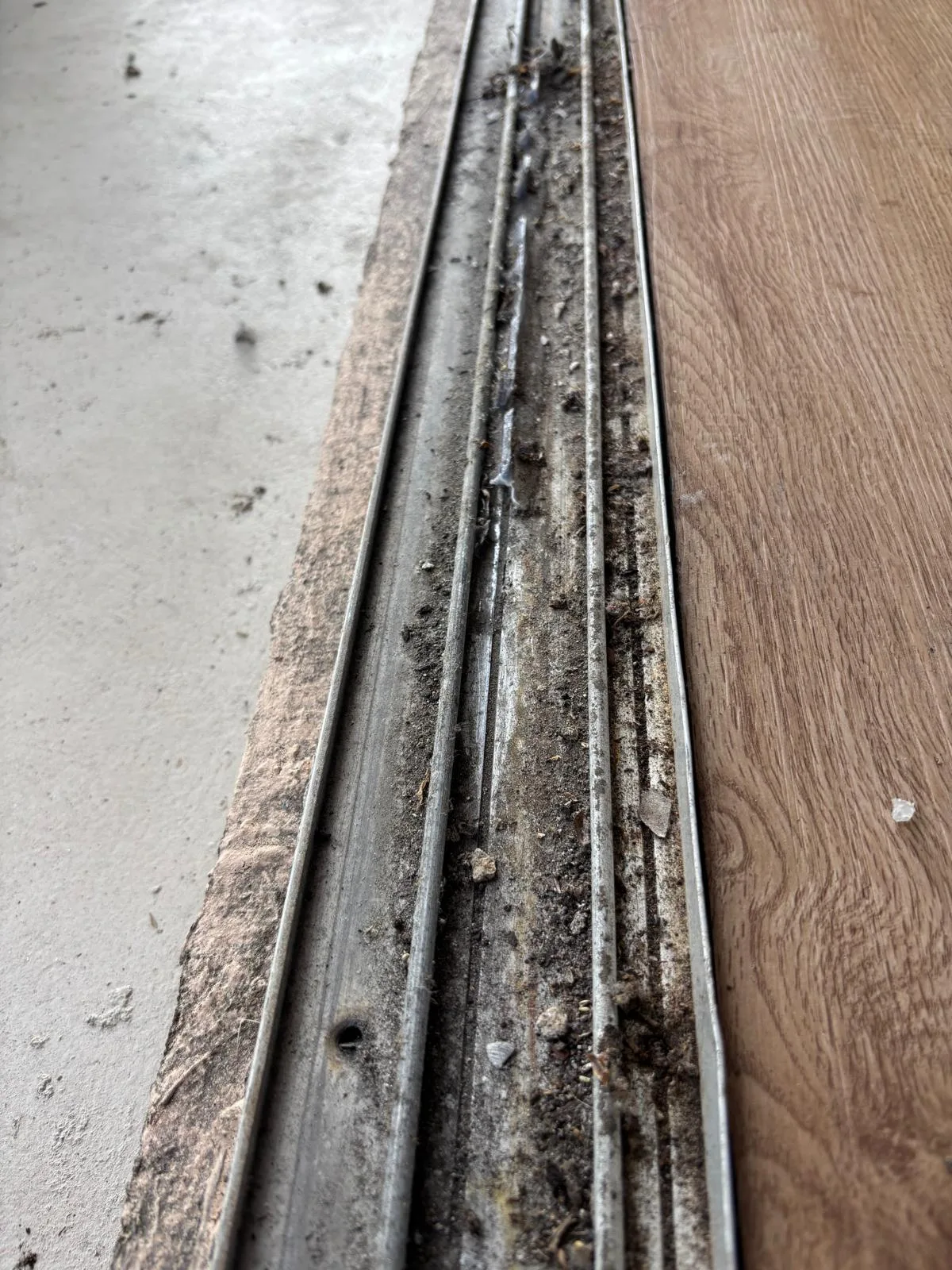
For lightweight interior bypass doors weighing under 40 pounds, DIY reseating is often feasible with a second person and basic mechanical confidence. Lift the panel, tilt the top rail into the upper track groove first, then lower the bottom rollers into the lower track channel. Once seated, test by sliding slowly and listen for grinding that indicates a roller is not fully engaged.
For standard patio doors - 60 to 150 pounds of aluminium-framed tempered glass - Treasure Coast Sliding Door Repair recommends professional reseating. The weight differential changes the physics significantly: an uncontrolled panel shift during lifting can fracture the glass at its edge, damage the frame corner joints, or deform the track channel with a concentrated point load. TCSDR technicians carry rated panel-handling equipment specifically because of this weight range.
If the original derailment cause is corrosion buildup or a bent aluminium channel section, no amount of careful lifting technique will prevent immediate re-derailment. The underlying track condition must be corrected first - a repair step that requires professional assessment and often track hardware replacement. See the TCSDR Fort Pierce track repair page for a full description of what this service includes.
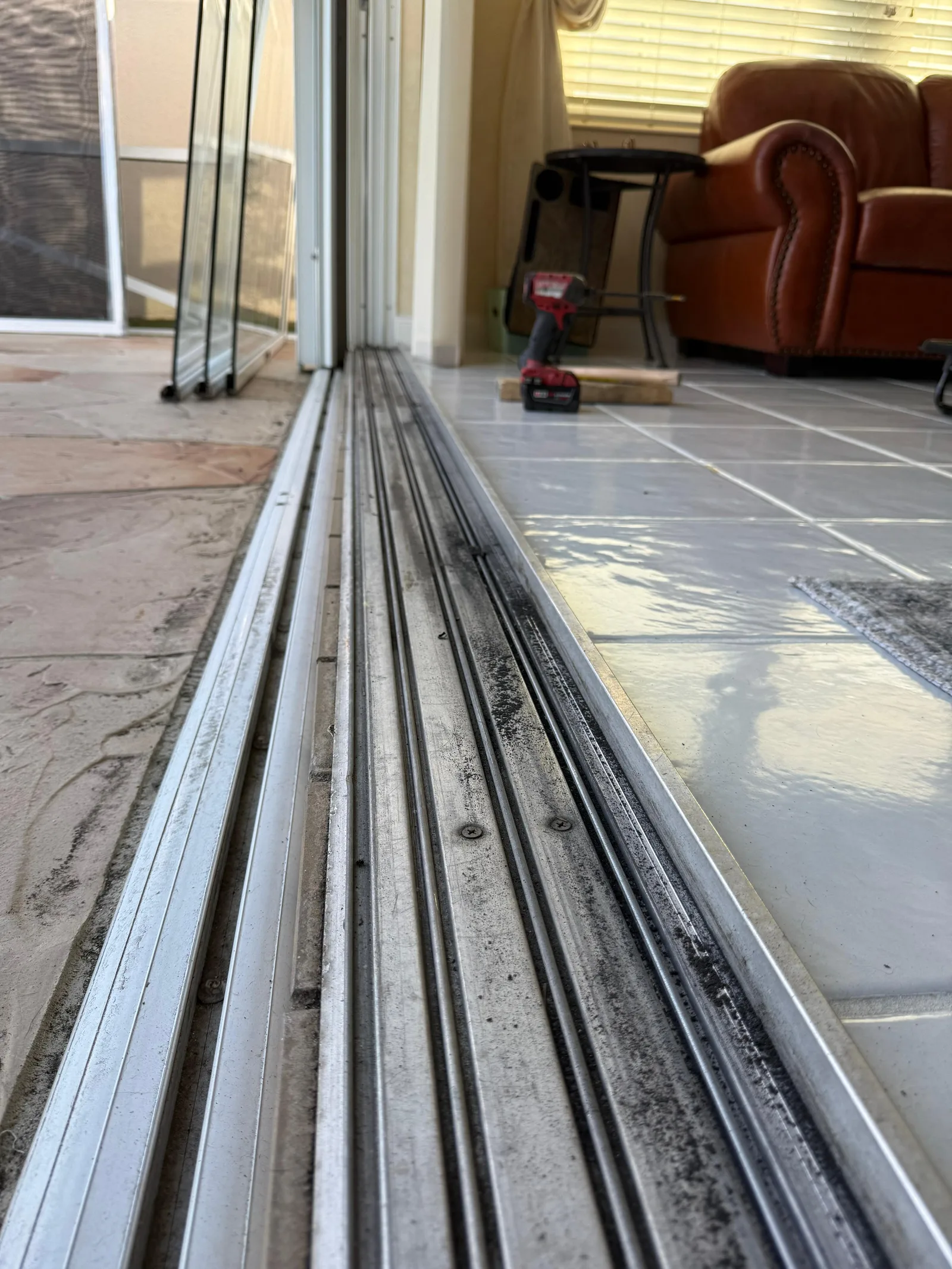
Three track channel conditions make standard reseating impossible without prior repair. First, a bent channel wall that has closed the channel opening below the roller diameter - if the gap is narrower than the roller wheel, the roller cannot enter regardless of lifting technique. Second, a corrosion ridge that has built up above the channel floor level, which causes the roller to ride on the ridge rather than engaging the channel bed. Third, a packed debris mass in the channel corner that blocks the roller from reaching its seated depth.
Fort Pierce homes near the Indian River Lagoon frequently present the corrosion ridge condition. Salt-air oxidation on aluminium is well documented by ASTM G48 corrosion test standards, which quantify the pit growth rates that produce raised surface features on aluminium channel floors in coastal environments.
Treasure Coast Sliding Door Repair clears all three obstacle types before attempting panel reseating. Removing a corrosion ridge with abrasive tools without checking channel wall thickness risks creating a thin spot that will develop a crack under roller load - TCSDR uses precision depth gauges to confirm channel integrity before and after track remediation.
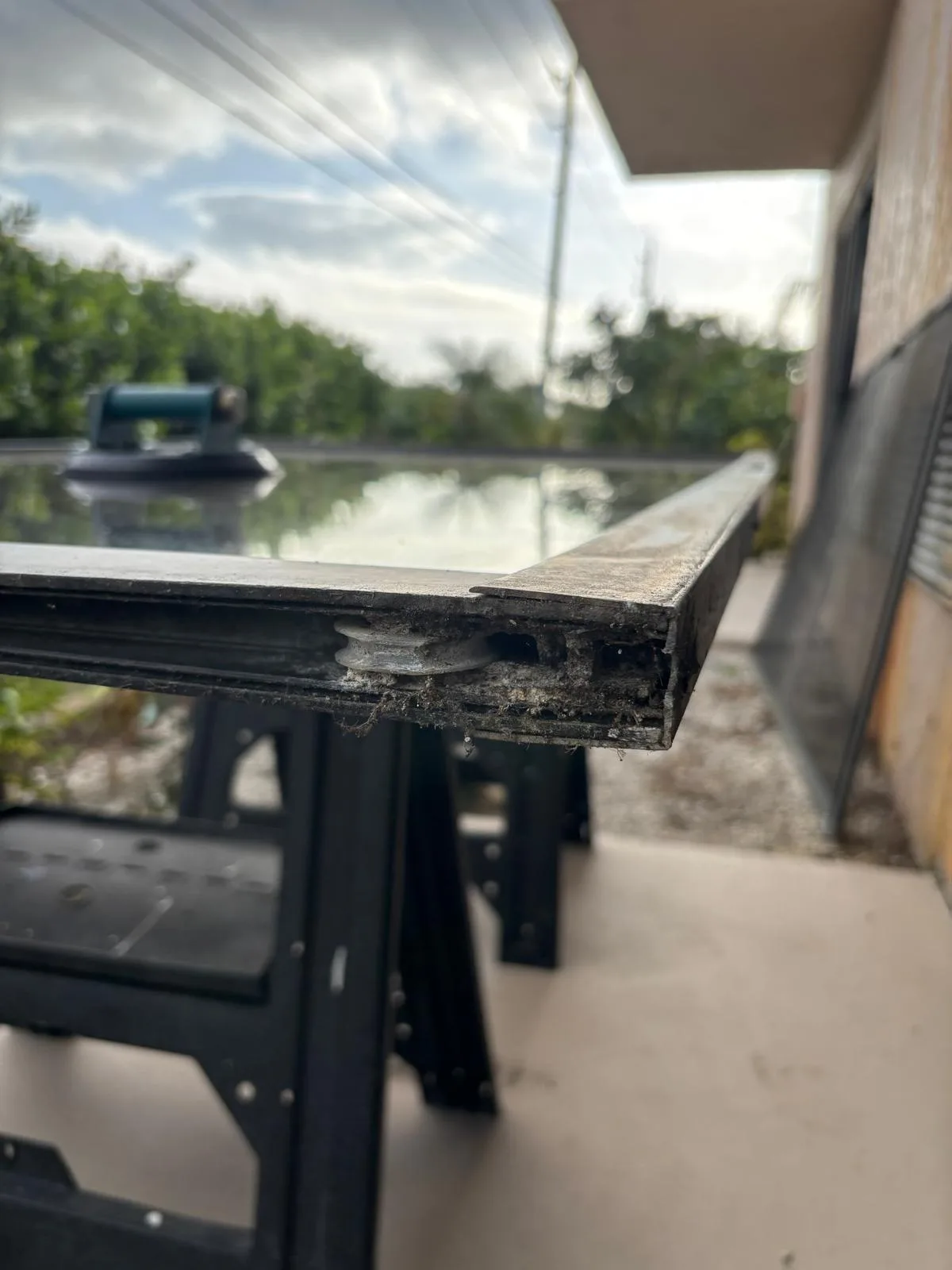
Standard aluminium-framed patio doors are designed with enough clearance in the upper track groove to allow the panel to tilt inward at the top. This tilt creates the vertical clearance needed to lift the roller cartridge clear of the lower track channel lip. For most Fort Pierce residential patio doors, tilting the top 1.5 to 2 inches inward while lifting the base 0.5 inches is sufficient to clear the upper track and position the rollers above the lower channel opening.
The sequence matters. Engage the upper groove first - slide the top edge of the panel into the upper track before attempting to lower the base rollers into the lower channel. If the top is not engaged, the panel has no pivot point and the base rollers cannot be guided accurately. Treasure Coast Sliding Door Repair trains technicians to maintain upper groove engagement throughout the entire reseating movement.
Sliding door track repair fort pierce calls frequently involve homeowners who attempted reseating by pushing the bottom of the panel up without engaging the upper groove first, resulting in the panel jamming diagonally across the door opening - a condition that requires more effort to resolve than the original derailment. TCSDR field data from Fort Pierce service calls places this mistake in roughly one in four DIY-attempted cases.
Every aluminium sliding door panel has roller height adjustment screws accessible through holes in the bottom door rail. Turning these screws raises or lowers the roller cartridge within the panel frame, which raises or lowers the panel height above the track channel floor. After reseating, height adjustment is not optional - it is the step that sets the door panel parallel to the track and ensures the glass panel seals flush against the weatherstrip.
A panel that was derailed often has one roller set at a different height than the other. This asymmetry is sometimes the original cause of the derailment: the higher-side roller carries excessive load, the lower-side roller loses channel contact during door movement, and eventually the lower roller climbs the channel wall and exits the rail.
Treasure Coast Sliding Door Repair uses a panel level and a feeler gauge to set both rollers to equal height after reseating. This balanced load distribution is the single most important factor in preventing repeat derailment under Fort Pierce's daily thermal cycling conditions, where aluminium door frames expand and contract across a 30-degree temperature range between early morning and afternoon.
Not always. When the channel is clear and the rollers are intact, reseating is accomplished by tilting and lowering the panel without full removal. TCSDR handles the majority of reseating calls this way, completing the work without removing the panel from the opening entirely.
Full removal becomes necessary when the track channel requires replacement or when roller cartridges need to be swapped. Accessing roller mounting hardware requires the panel to be out of the opening on a padded work surface. Treasure Coast Sliding Door Repair carries padded panel stands on every service vehicle for this purpose.
For Fort Pierce homeowners with second-floor patio doors or balcony-access sliders, panel removal and reseating requires two-person technique and safety equipment appropriate for the elevation. TCSDR's two-technician dispatch option is available for elevated or oversized panel work - call (772) 207-4146 and describe your door location when scheduling so TCSDR can send the right crew configuration.
After reseating, test the door through three to five full travel cycles before considering the job complete. Listen for grinding, which indicates debris still in the channel or a roller not fully seated. Feel for resistance that increases at a specific point in the travel range, which points to a remaining channel deformation. Observe the panel alignment relative to the door frame - it should remain parallel throughout the full travel range.
Test the locking mechanism. With the door fully closed, operate the latch and verify the bolt engages the strike plate with firm resistance. A lock that closes with a soft click rather than a positive stop is not fully engaged. Treasure Coast Sliding Door Repair adjusts the strike plate or roller height until positive lock engagement is confirmed.
Finally, check the weatherstrip seal. Run your hand along the door edge perimeter with the door closed - you should feel even resistance from the weatherstrip with no gaps. Gaps indicate the panel height or lateral position still needs fine adjustment. TCSDR includes all of these checks as standard procedure on every track reseating call throughout Fort Pierce's ZIP code coverage area.
| Service | Time | Price (national avg) |
|---|---|---|
| Panel reseating - rollers and track intact | 30-60 min | $150-$250 |
| Reseating with roller height adjustment | 45-75 min | $150-$275 |
| Reseating plus roller cartridge replacement | 60-120 min | $200-$380 |
| Full panel removal and reseating | 1-2 hrs | $200-$350 |
| Track clearance and reseating (debris or corrosion) | 60-90 min | $175-$325 |
| Two-technician elevated panel service | 1.5-2.5 hrs | $280-$450 |
National-average pricing - your on-site tech provides binding quote before work begins.
Treasure Coast Sliding Door Repair has provided licensed sliding door track and roller services throughout Fort Pierce and St. Lucie County for over a decade. TCSDR holds active licensure through the Florida Department of Business and Professional Regulation and maintains a 5.0-star rating across 75 verified customer reviews. Our technicians carry panel-handling equipment and a full parts inventory on every service vehicle, completing the large majority of track reseating calls in a single visit without return trips.